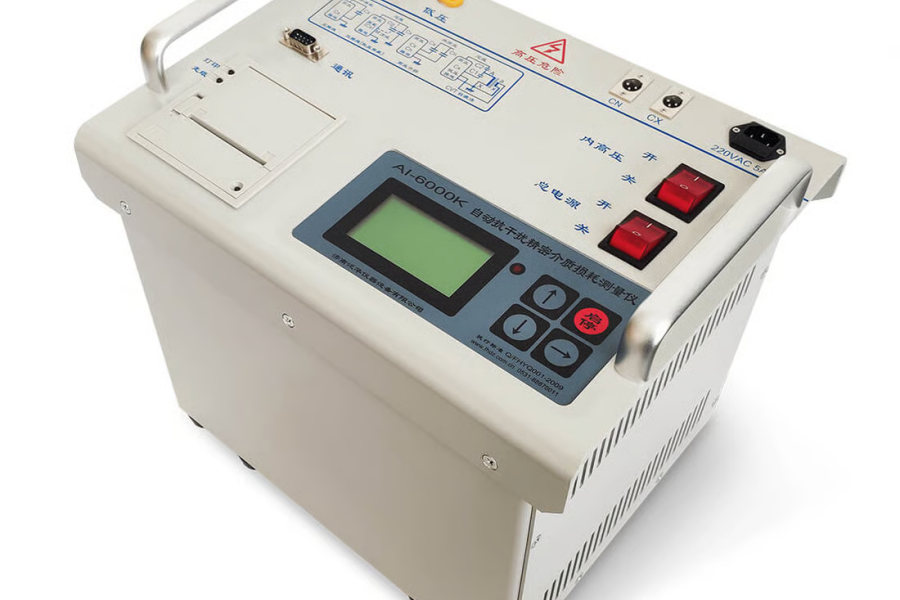
The Automatic HV Capacitance & Dissipation Factor Test Set is essential equipment in high-voltage testing and diagnostics. It accurately measures capacitance and dissipation factor (tan δ), which are critical parameters for assessing insulation health in power apparatus such as transformers, bushings, and cables. Automation enhances precision and efficiency, minimizing human error and speeding up data collection in complex electrical systems.
Core Functions and Measurement Principles
This advanced test set operates by applying high voltage to the device under test (DUT) and measuring the resulting current and phase angle to determine capacitance and dissipation factor. The dissipation factor is a crucial indicator of insulation deterioration, reflecting energy losses within insulating materials. The automated system controls voltage levels, measures electrical parameters, and processes data digitally, ensuring repeatable and reliable results that support preventive maintenance.
Importance in Transformer and Power Equipment Diagnostics
Using an Automatic HV Capacitance & Dissipation Factor Test Set provides technicians with vital insights into transformer insulation condition. Early detection of insulation degradation helps avert catastrophic failures and prolong equipment lifespan. This test set is especially valuable for on-line and off-line testing in substations, enabling power utilities to maintain system reliability and reduce unplanned outages through timely interventions.
Automation Benefits in High-Voltage Testing
Automation in HV capacitance and dissipation factor testing reduces testing time significantly and enhances safety by limiting the need for manual operations near high-voltage components. The system typically includes programmable test sequences, data logging, and reporting features, which improve consistency across multiple samples and testing cycles, creating a standardized approach for utility companies and diagnostic professionals.
Typical Specifications and Design Features
These test sets are designed to handle voltage ranges from a few hundred volts up to several kilovolts, with high measurement accuracy often better than 0.1% for capacitance and 0.001% for dissipation factor. Advanced units incorporate features like digital displays, touchscreen interfaces, and communication ports for remote control and integration into asset management systems, optimizing both usability and data accessibility.
Application in Cable and Bushing Testing
HV capacitance and dissipation factor testing isn't limited to transformers; it's equally crucial for cables and bushings. The Automatic HV Capacitance & Dissipation Factor Test Set can detect moisture ingress, tracking, and partial discharge risks in cable insulation. For bushings, it assesses the condition of capacitive grading layers and epoxy or oil insulation, helping prevent breakdowns that could jeopardize power system stability.
Challenges and Considerations in High-Voltage Testing
Despite automation, certain challenges remain, including environmental factors that might affect measurement stability, such as temperature, humidity, and electromagnetic interference. Proper grounding, shielding, and calibration of the Automatic HV Capacitance & Dissipation Factor Test Set are vital to ensure accurate results. Understanding these limitations ensures test reliability and aids in interpreting results correctly.
Integration with Asset Management and Diagnostic Software
Modern Automatic HV Capacitance & Dissipation Factor Test Sets are often integrated with asset management and diagnostic software platforms. This integration facilitates trend analysis, condition-based maintenance, and decision-making based on historical data. By enabling remote data transfer and compatibility with SCADA systems, these test sets support comprehensive monitoring of electrical infrastructure health.
Training and Safety Protocols for Operators
Proper use of the Automatic HV Capacitance & Dissipation Factor Test Set requires specialized training. Operators must understand electrical hazards, equipment operation, and data interpretation. Adherence to safety protocols, including isolation procedures and personal protective equipment (PPE), is mandatory to ensure safe testing environments, particularly when working with high-voltage systems.
Future Trends and Technological Innovations
Emerging trends in the development of Automatic HV Capacitance & Dissipation Factor Test Sets include enhanced digital signal processing, wireless connectivity, and AI-driven diagnostics. These advancements aim to increase testing accuracy, reduce operator involvement, and provide predictive analytic capabilities, reinforcing the role of these test sets in smart grid and next-generation power system maintenance.
Quote Inquiry
contact us